






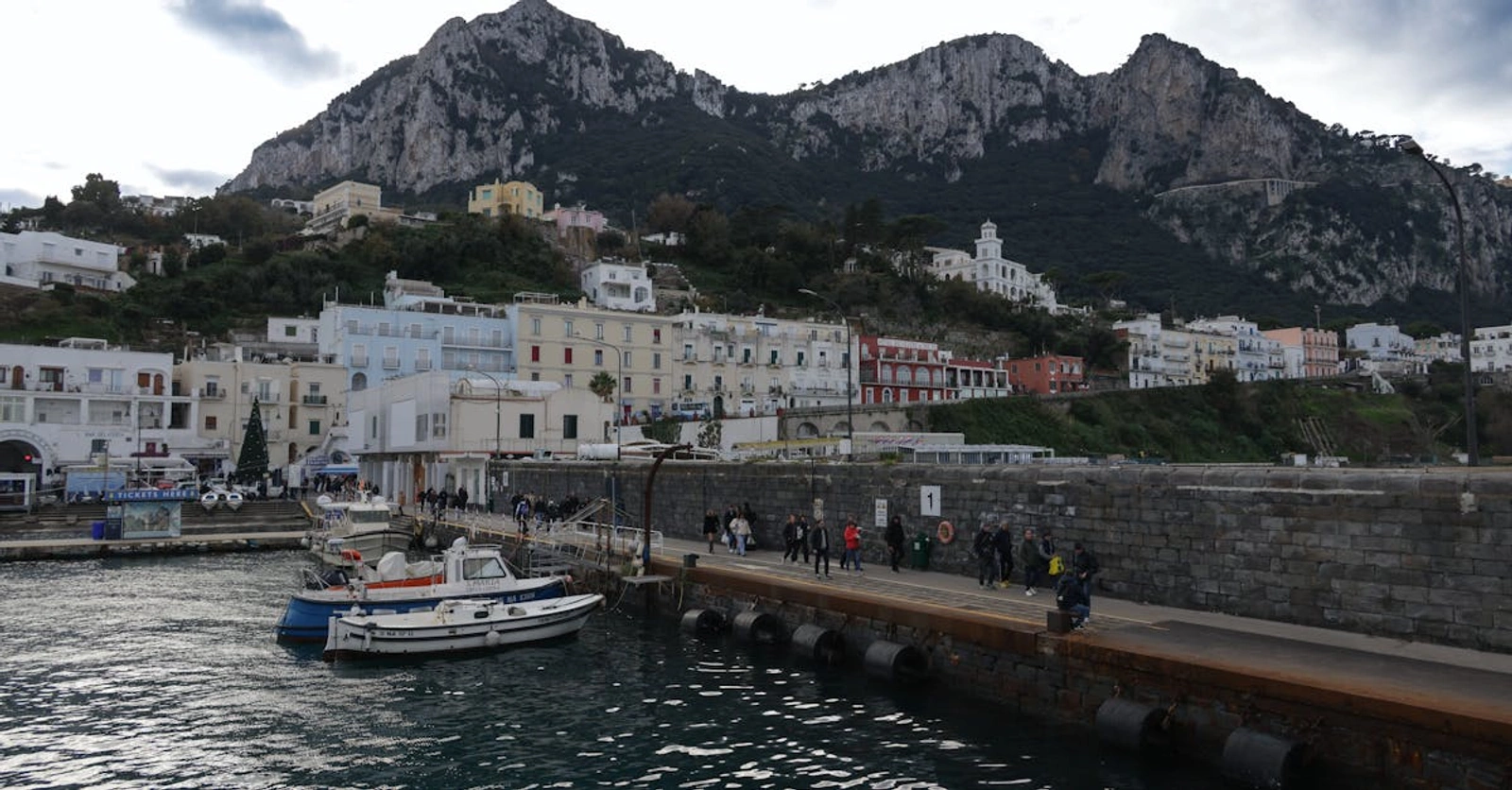
Your Capri island travel guide starts with a confession: the first time I stepped off the hydrofoil at Marina Grande, bags in hand, I nearly turned around. The crowds at the port were shoulder-to-shoulder in July. A mistake many first-timers make. Within 20 minutes, though, I was sipping a limoncello spritz on a terrace 300 meters above the sea, completely alone, watching the sun melt into the Tyrrhenian. That's the thing about Capri. The island rewards those who know where to go, when to arrive, and how to experience it beyond the obvious.
This Capri Italy guide is built for travelers who expect more than a day trip. You want privacy, exceptional service, and access to the kind of experiences that don't show up on a quick search. Whether you're considering a week-long villa stay with your family or scouting the island for the first time, the details here come from years of on-the-ground knowledge of the Amalfi Coast and its crown jewel.
Key Takeaways
- Visit Capri in late May or mid-September through October to enjoy warm weather, open attractions, and significantly fewer crowds than peak summer.
- Choose between Capri town (vibrant, social) and Anacapri (quiet, authentic) as your base, this single decision shapes your entire Capri island travel experience.
- Book a private boat tour on your first full day to circle the island, visit the Blue Grotto, and scout hidden swimming coves you can return to later.
- For families or groups staying 4+ nights, a private villa offers far more space, privacy, and per-person value than even the finest Capri hotels.
- Arrive on the island before 8:00 AM during summer to beat the day-trip crowds and enjoy two hours of serene access to top attractions.
- Reserve restaurant and beach club spots well in advance, La Fontelina and top dining venues book out weeks ahead during high season.
Why Capri Remains the Ultimate Mediterranean Escape
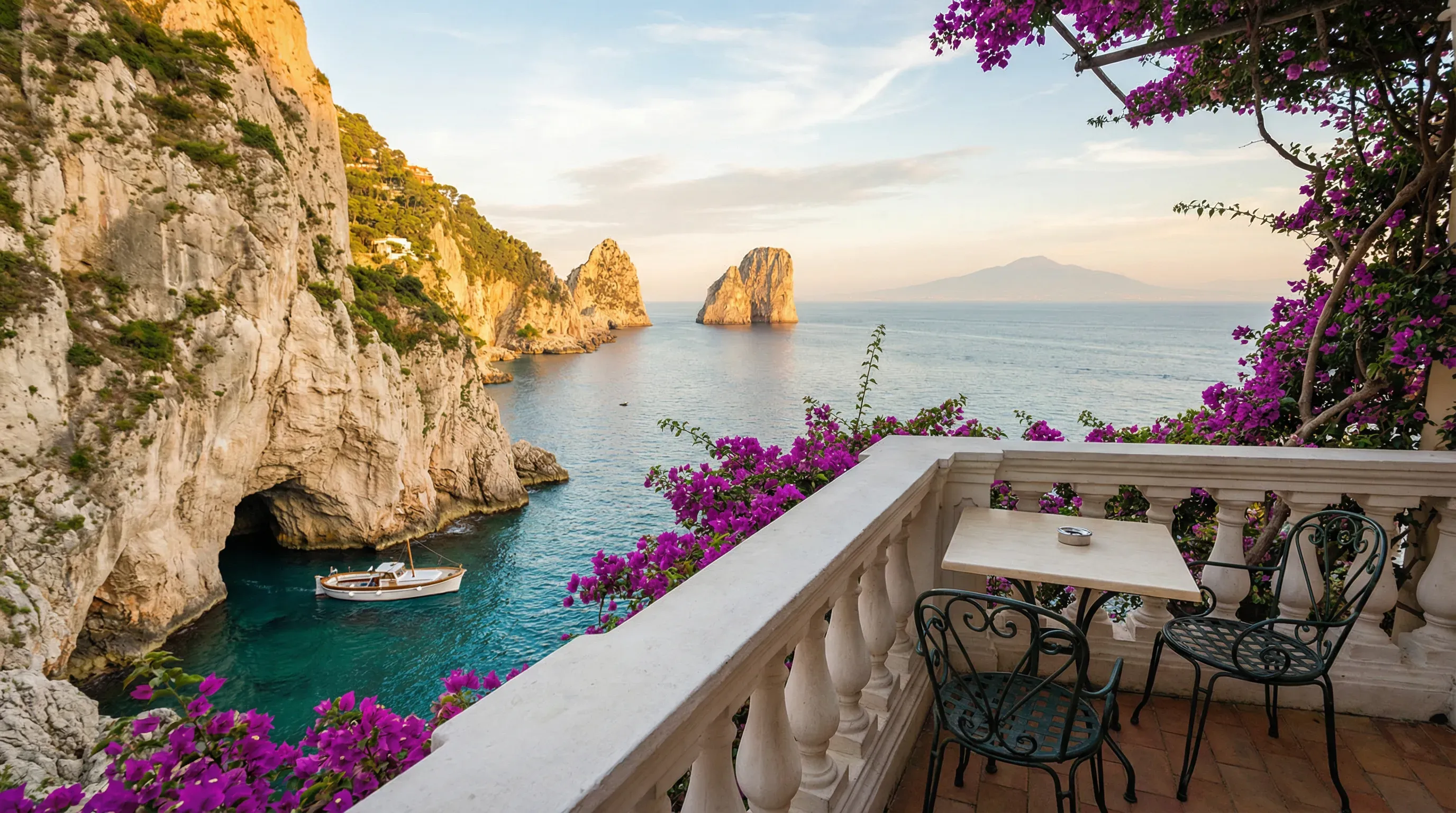
Capri isn't coasting on reputation. The island, just 19 miles off the Italian coast in the Bay of Naples, continues to attract the world's most discerning travelers for reasons that go beyond scenery.
The water is a different color here. Not metaphorically, the aquamarine clarity around Capri's limestone cliffs is the result of unique underwater geology and minimal river runoff. You'll notice it the moment your boat rounds the eastern headland.
But what truly sets Capri apart from other Mediterranean islands is its density of excellence in a compact space. The island measures just 4 square miles, yet within that footprint you'll find:
- Michelin-quality dining steps from ancient Roman ruins
- Clifftop accommodations with 180-degree views across the Gulf of Naples
- Private sea caves accessible only by small boat
- Artisan shopping in the Piazzetta and along Via Camerelle
The combination of natural beauty and refined infrastructure is nearly impossible to replicate. Sardinia offers wild coastlines. The French Riviera delivers glamour. Capri gives you both, compressed into an island you can cross on foot in under two hours.
For families and couples who value privacy, visiting Capri island offers something increasingly rare: a destination where exclusivity isn't manufactured. It's simply the nature of a place with limited space, strong local identity, and a century-long tradition of hosting guests at the highest level.
Your action step: Before booking anything, decide whether you want a base in Capri town (more social, closer to the Piazzetta) or Anacapri (quieter, more authentic, better hiking access). This single decision shapes your entire trip.
How to Get to Capri Island
Getting to Capri is simpler than most people expect, but timing and method matter enormously, especially if you're traveling with luggage, children, or a preference for avoiding crowds.
Private Transfers and Yacht Charters
If your budget allows it, a private yacht charter from Naples or Sorrento transforms the journey into the first highlight of your trip. You'll skip the ferry terminal entirely, board at a private marina, and arrive at Capri's Marina Grande on your own schedule.
Most charter services offer vessels ranging from sleek 40-foot motorboats to full-crewed sailing yachts. The crossing from Sorrento takes roughly 30 minutes by speedboat, and many guests choose to circle the island before docking, stopping at the Blue Grotto or the Faraglioni rocks along the way.
For those staying in luxury villas on Capri, NCGVilla's 24/7 concierge team can arrange private sea transfers with captains who know the island's coastline intimately, which means you arrive relaxed rather than frazzled.
A practical note: Private transfers from Naples Capodichino Airport to Capri's port typically take 45–60 minutes by car, plus the sea crossing. Book your boat at least 48 hours in advance during peak season (June–September).
Ferry Options From Naples and Sorrento
Hourly ferries connect Capri to both Naples (Molo Beverello terminal) and Sorrento's Marina Piccola. You have two choices:
- High-speed hydrofoil: 45 minutes from Naples, 20 minutes from Sorrento. Roughly €22–25 per person each way.
- Slower ferry: 80 minutes from Naples, 30 minutes from Sorrento. About €15–18 per person. Allows vehicles (though cars are restricted on Capri from April to October).
During winter months, specifically January and February, ferry schedules shrink dramatically due to rough sea conditions. Some days, crossings cancel entirely. If you're visiting Capri island in the off-season, build flexibility into your itinerary.
Your action step: Book your return ferry tickets before you arrive on Capri. During summer weekends, the last ferries back to the mainland sell out by early afternoon, stranding day-trippers.
When to Visit Capri for an Exclusive Experience
Timing is everything on an island that receives over 2.3 million visitors annually but has a resident population of just 14,000.
The sweet spots are May and late September through mid-October. During these windows, you get warm water (22–24°C), open restaurants and shops, functioning ferry schedules, and dramatically fewer crowds than the July–August peak.
Here's the seasonal breakdown:
- January–February: The quietest months. Most hotels, restaurants, and shops close. Streets feel almost eerily peaceful. Perfect if you want solitude, but expect limited dining and reduced ferry service. Sorrento remains the only nearby town that stays fully operational year-round.
- March–April: The island slowly wakes up. Easter week brings a brief surge of Italian visitors. Weather is mild but unpredictable.
- May–June: Arguably the best time. Gardens are in full bloom, the sea is warming, and you'll share the island with far fewer tourists than in high summer.
- July–August: Peak season. The Piazzetta buzzes until 2 AM. Beaches require reservations days in advance. Beautiful, yes, but crowded.
- September–October: A second golden window. The sea is warmest in September (often 26°C). Crowds thin considerably after the first week.
- November–December: Quiet, with a brief festive atmosphere around Christmas. Many businesses close by mid-November.
One timing hack that consistently works: Arrive on Capri by 8:00 AM during summer months. The day-trip crowds from Naples don't land until 10:00 or later, which means you get roughly two hours of the island at its most serene, smooth water, empty paths, and first access to attractions like the Blue Grotto.
Your action step: If you're planning a villa stay of 5+ nights, target the last two weeks of September. You'll get peak-season weather with shoulder-season peace. Start your search 4–6 months ahead, the best properties book early.
Where to Stay on Capri: Luxury Villas and Accommodations
Where you sleep on Capri defines the entire experience. The island is small enough that location differences of just 500 meters can mean the difference between noisy foot traffic and total seclusion.
Private Villa Rentals for Discerning Travelers
For families, multi-generational groups, or anyone who values space and privacy, a private villa rental is the clear choice on Capri. Hotels offer polish, but villas offer freedom, your own pool, your own terrace, your own schedule.
Consider the difference: a luxury hotel room on Capri averages 35–45 square meters. A private villa gives you 200–500+ square meters of living space, often with dedicated outdoor areas, private gardens, and unobstructed sea views.
Several standout properties illustrate what's available:
- Villa Cristina offers 5 bedrooms, an infinity pool, ocean views, sauna, and jacuzzi, sleeping up to 14 guests. Ideal for a large family gathering where everyone has room to breathe.
- Villa Casa Amor, perched along the famous Via Tragara, provides 6 bedrooms with spectacular ocean panoramas, a private pool, and full 24/7 concierge service for up to 13 guests.
- For a more intimate stay, Villa La Dolce Vita is a contemporary 3-bedroom property with Gulf views, a pool, hot tub, and terraces, minutes from town yet perfectly secluded.
NCGVilla, co-founded by Antonella D'Angelo and Ciro Cortese, curates each of these properties personally. Their concierge team remembers your preferences from previous stays, which means your second visit feels like coming home rather than checking in.
Capri's Most Distinguished Hotels
Capri's top hotels are legendary for good reason. Properties like the Grand Hotel Quisisana, Hotel Punta Tragara (designed by Le Corbusier), and Capri Palace Jumeirah in Anacapri offer extraordinary service, spa facilities, and central locations.
Hotels work best for shorter stays of 2–3 nights or for travelers who prefer full-service dining and daily housekeeping without managing a private property. Expect to pay €800–€3,500+ per night during peak season for a top-tier suite.
The honest assessment: for stays of 4+ nights with family, a villa almost always delivers better value per person and significantly more privacy.
Your action step: Define your group size and trip length first. Solo couple for a long weekend? A boutique hotel suite works beautifully. Family of 8 for a week? A villa is the only option that makes sense. Browse Capri villa options to compare layouts and locations.
Unmissable Experiences When Visiting Capri Island
Capri packs an extraordinary number of world-class experiences into its 4 square miles. Here are the ones that justify the trip.
The Blue Grotto and Private Boat Tours
The Blue Grotto (Grotta Azzurra) is Capri's most famous attraction, and for once, the hype is warranted. This sea cave, used by Roman emperors as a private swimming pool nearly 2,000 years ago, glows with an otherworldly blue light created by sunlight passing through an underwater opening.
Here's what most guides won't tell you: the experience lasts about 5 minutes. You transfer from your boat into a small rowboat, duck through a meter-high cave entrance, float inside the glowing cavern, and exit. It's magical but brief.
To make it worthwhile, combine the Blue Grotto with a full private boat tour of the island (3–4 hours). You'll also see:
- The White Grotto and Green Grotto, far less crowded and equally striking
- Hidden swimming coves accessible only by sea
- The Faraglioni rocks from water level, which is a completely different perspective than the clifftop view
Early morning visits (before 9:00 AM) allow swimming inside the Blue Grotto before the gondola tour operators begin their daily rotations. This requires a private boat and a captain who knows the timing.
Monte Solaro, Gardens of Augustus, and the Faraglioni
Monte Solaro is Capri's highest point at 589 meters. A single-seat chairlift carries you from Anacapri's center to the summit in 12 minutes. On clear days, you can see the entire Bay of Naples, Vesuvius, and the Amalfi Coast stretching south toward Salerno. The chairlift operates year-round (roughly €12 round trip) and is one of the island's most thrilling and underrated experiences.
The Gardens of Augustus, originally created by German industrialist Friedrich Alfred Krupp in the early 1900s, sit on a terrace overlooking the Faraglioni and the winding Via Krupp below. Entry costs just €1, making it one of the best-value views in the Mediterranean.
The Faraglioni, three massive limestone stacks rising from the sea, are Capri's most photographed landmark. The middle rock, Faraglione di Mezzo, has a natural arch you can boat through. Local tradition says couples who kiss while passing under the arch will have eternal love. Cheesy? Absolutely. Will you do it anyway? Probably.
Your action step: Book a private boat tour for your first full day on Capri. It gives you a complete orientation of the island from the water, and you'll identify the beaches and coves you want to return to on foot later in the week.
The Finest Dining and Beach Clubs on Capri
Eating and lounging on Capri is serious business. The island has roughly 120 restaurants within its tiny footprint, and the best ones book out weeks in advance.
La Fontelina Beach Club is the island's most iconic seaside spot, tucked beneath the Faraglioni rocks. Celebrities, fashion editors, and Italian industrialists share the concrete platforms and candy-colored umbrellas. During high season (July–August), a 3-day minimum reservation is required for sun loungers. Lunch here, fresh seafood, cold white wine, the Faraglioni looming overhead, is one of those meals you'll describe to people for years.
Bagni Internazionali, nearby, is famous for its vibrant, colorful umbrellas and slightly more relaxed vibe. It's where locals go when La Fontelina feels too scene-driven.
For dining beyond the beach clubs:
- Da Gemma serves traditional Caprese cuisine with ingredients sourced from the island. Their ravioli capresi (filled with local caciotta cheese and marjoram) is the dish to order.
- Da Luigi Restaurant & Beach Club combines a prime Faraglioni-view location with honest, unfussy seafood.
- Il Riccio in Anacapri holds a Michelin star and specializes in seafood and an extraordinary dessert buffet overlooking the Blue Grotto.
- Aurora on Via Fuorlovado has served Capri's elite since 1937. Their pizza is, improbably, some of the best on the island.
A warning: Restaurant prices on Capri are 30–50% higher than mainland Amalfi Coast towns. A dinner for two with wine at a top restaurant will run €200–€400+. This is not the place to worry about the bill.
If you're staying in a villa, your concierge can arrange a private chef for evenings when you'd rather eat on your own terrace. After a long day at the beach, this is often the most luxurious option of all.
Your action step: Make dinner reservations at La Fontelina and at least one sit-down restaurant before you arrive. For July or August visits, book 3–4 weeks ahead. For September, 1–2 weeks is usually sufficient.
Navigating Capri Like an Insider
Getting Around the Island
Here's an honest admission that most Capri Italy guide articles skip: getting around the island can be frustrating if you don't plan ahead.
Cars are restricted from April through October. Your options are:
- The funicular: Runs from Marina Grande to Capri town center in 5 minutes. €2.20 per ride. Essential and efficient, but lines during midday can stretch to 20–30 minutes.
- Local buses: Small orange buses connect Marina Grande, Capri town, Anacapri, and Marina Piccola. Frequent but often standing-room only.
- Convertible taxis: Capri's open-top taxis are a quintessential experience. Flat rates apply, Marina Grande to Capri town costs about €15. Marina Grande to Anacapri runs roughly €20–25.
- On foot: The best way to see Capri, honestly. The famous Via Krupp, a switchback path originally built in 1902, descends from the Gardens of Augustus to Marina Piccola. Punta Tragara and Belvedere Cannone trails offer stunning panoramic walks of 30–60 minutes.
If you're staying in a private villa, your property manager can often arrange a dedicated driver for the duration of your stay, a genuine luxury that eliminates all the logistical friction.
Shopping, Culture, and Hidden Gems
The Piazzetta (Piazza Umberto I) is Capri's social heart, a tiny square surrounded by cafés where people-watching is elevated to an art form. An espresso here costs €7. A cocktail at sunset costs €18–22. You're paying for the scene, and it's worth it at least once.
For shopping, Via Camerelle and Via Le Botteghe offer:
- Handmade leather sandals (Capri sandals are a genuine local craft, Canfora has been making them since 1946)
- Carthusia perfumes, produced on the island since 1380 using local flowers
- Limoncello made from Capri's own lemons, distinctly different from mainland versions
Culturally, don't miss Villa Jovis, Emperor Tiberius's clifftop palace from 27 AD. It's a 45-minute uphill walk from Capri town, and most tourists skip it, which means you'll often have the ruins almost to yourself. Villa San Michele in Anacapri, built by Swedish physician Axel Munthe, houses Roman artifacts and one of the island's best gardens. The Certosa di San Giacomo, a 14th-century Carthusian monastery, now serves as an archaeological museum and event space.
Your action step: Dedicate one morning to the walk from Capri town to Villa Jovis. Leave by 8:30 AM, carry water, and wear sturdy shoes. The path winds through residential lanes and lemon groves before opening to one of the most dramatic viewpoints on the island. Allow 2.5 hours round trip including time at the ruins.
Conclusion
Capri rewards preparation. The travelers who have the best experiences here aren't necessarily the ones who spend the most, they're the ones who arrive with a plan, the right timing, and a base that actually fits their needs.
This Capri island travel guide covers the essentials, but every trip here reveals something new. A restaurant a local driver recommends. A swimming cove you spot from a boat. A sunset from your villa terrace that makes you seriously consider buying property on the island.
The best version of your Capri trip starts with two decisions: when to go (late May or September) and where to stay (a private villa if you're traveling with family or friends). Everything else, the Blue Grotto, the Faraglioni, the long lunches at La Fontelina, falls into place once those foundations are set.
Start planning 4–6 months ahead for peak season. Your future self, cocktail in hand on a clifftop terrace, will thank you.
Frequently Asked Questions About Capri Island Travel
What is the best time to visit Capri island for fewer crowds?
The best time to visit Capri is late May or late September through mid-October. These shoulder-season windows offer warm sea temperatures (22–26°C), open restaurants and shops, reliable ferry schedules, and significantly fewer tourists than the July–August peak, giving you a more exclusive experience.
How do you get to Capri from Naples or Sorrento?
High-speed hydrofoils run hourly from Naples (45 minutes, ~€22–25) and Sorrento (20 minutes). Slower ferries are also available at lower cost. For a more luxurious arrival, private yacht charters from either port let you skip terminal crowds and circle the island before docking.
Is it better to stay in a villa or hotel on Capri?
For stays of four or more nights, especially with family, a private villa offers far more space, privacy, and value per person than a hotel suite. Villas on Capri typically include private pools, sea-view terraces, and dedicated concierge service, ideal for groups seeking an unhurried, personalized experience.
What are the must-see attractions when visiting Capri island?
Top experiences include the Blue Grotto sea cave, a private boat tour around the Faraglioni rocks, the Monte Solaro chairlift for panoramic Bay of Naples views, the Gardens of Augustus, and the ancient ruins of Villa Jovis. Combining a boat tour with clifftop walks covers the island's highlights.
How much does a trip to Capri cost?
Capri is a premium destination. Ferry tickets run €15–25 each way, top hotel suites cost €800–€3,500+ per night in peak season, and dinner for two at a leading restaurant averages €200–€400. Private villa rentals often deliver better per-person value for groups and families.
Can you do Capri as a day trip or should you stay overnight?
While day trips are popular, staying at least two to three nights lets you experience Capri beyond the crowds. Early mornings before day-trippers arrive and golden-hour evenings reveal the island's true character, empty paths, serene swimming coves, and unhurried dining that a single day simply can't offer.